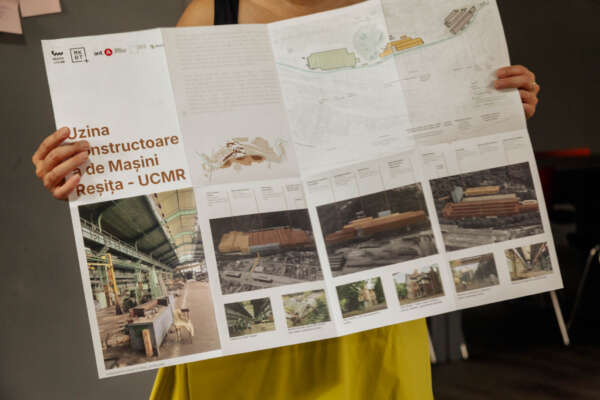
These are some of the questions we started with in this new phase of the Oral History Group (GIO), an initiative by Make Better (MKBT), developed as part of the Reșița Virtual Museum. This time, we are focusing on the world of UCMR through the project Universul Uzinal (The Factory Universe), exploring the factory's history and its place in the life of the city through the stories of the people who worked there.
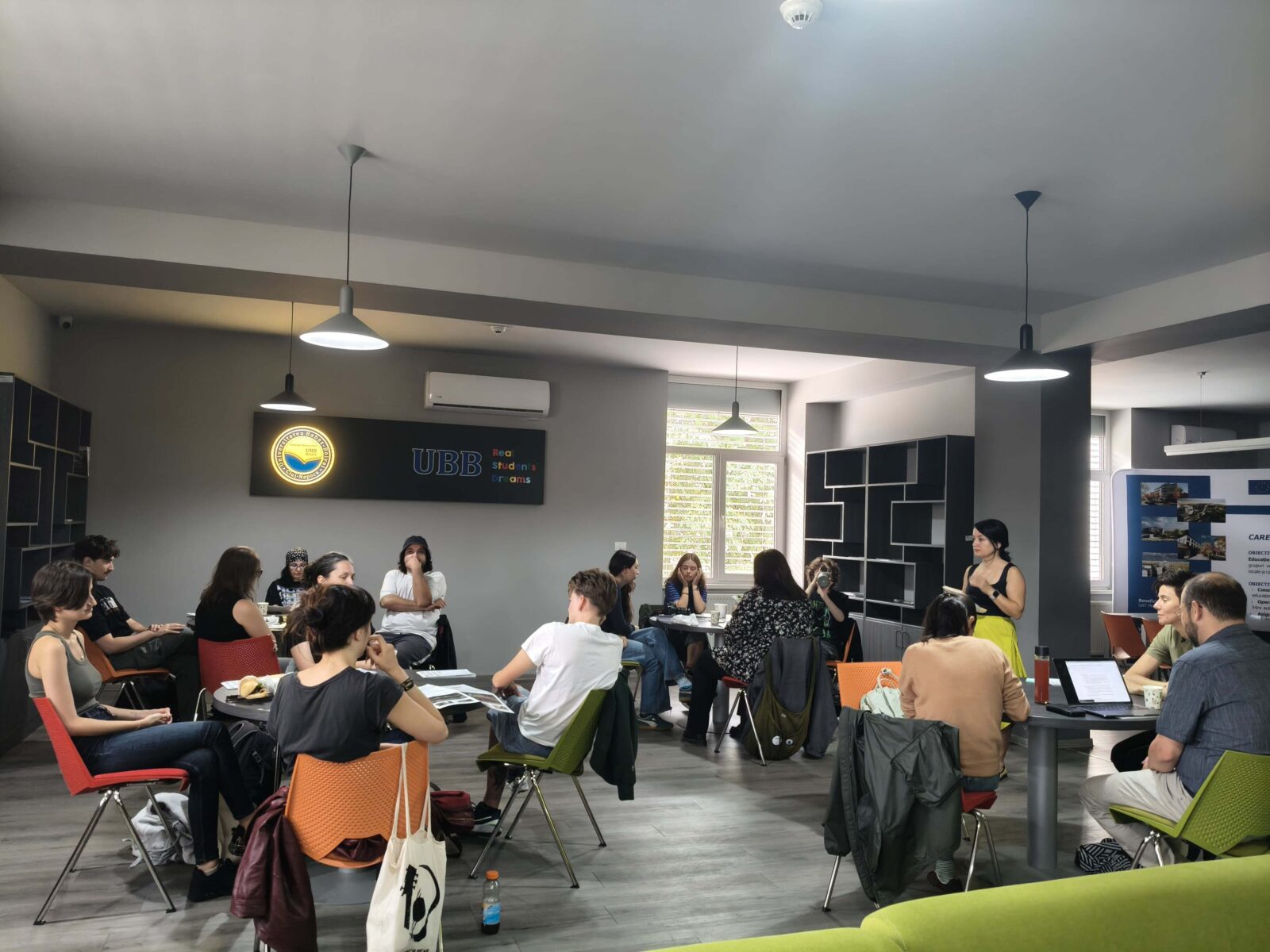
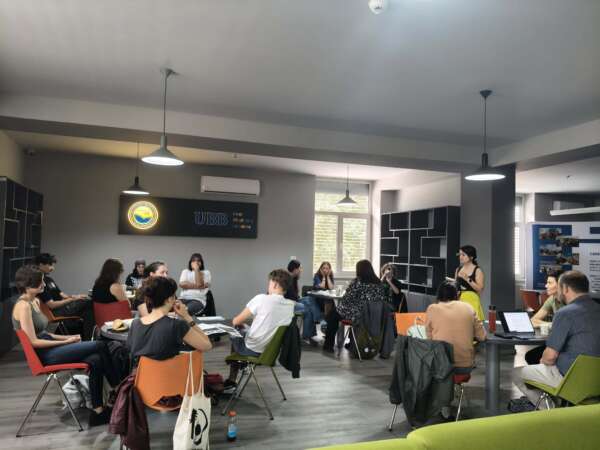
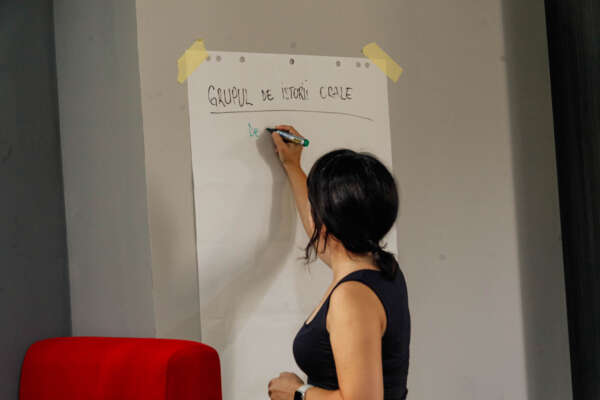
A few weeks ago, we gathered in Reșița for a week of fieldwork with the Oral History Group (GIO), which this year brings together professors and students from Babeș-Bolyai University in Cluj-Napoca, the MKBT team, journalists, photographers and visual artists. We also want to involve local residents in documenting and collecting stories, giving the community an active role in recovering its own history, as part of a process coordinated by Ioana Ciolea. We began with working sessions to discuss how to prepare for interviews and what we hoped to learn from them. We developed our questions together, then headed into the field and pressed record.
A little background: UCMR was one of the largest industrial enterprises in western Romania. Over the years, it produced locomotives, diesel engines, hydro turbines and other industrial equipment. Alongside the steelworks (CSR), the factory was one of the places around which much of the city's life revolved. Together, the two enterprises employed most of Reșița's workforce. There was even a local saying that almost everyone in Reșița had, or once had, a UCMR worker in the family.
In 1991, Reșița had around 48,000 employees, most of them working at the city's two major industrial plants. But the industrial decline that followed the 1989 Revolution radically transformed the city. Over the next three decades, Reșița lost around 25,000 jobs, more than half the number recorded in 1991. The impact extended across the heavily industrialised area of Caraș-Severin County, including the towns of Bocșa, Anina and Oravița, where, together with Reșița, approximately 44,000 jobs disappeared.
Today, the former industrial site is undergoing another transformation. Part of it has been taken over by Hidroelectrica, other sections are being dismantled, and Reșița City Hall, together with MKBT and FCBM, has begun efforts to preserve and reclaim some of the site's landmark buildings. As the site itself changes, we want to collect the stories of the people who kept it running, day after day, across generations.
About the Oral History Group
For us at MKBT, the Oral History Group is about understanding Reșița's history through the eyes of the people who lived it, with all the experiences and contradictions that come with it. We want to know what an ordinary day at the factory looked like. How did people learn their trade? What relationships developed between colleagues? And how did factory life intersect with life at home? These are things we rarely, if ever, find in official archives, yet they tell us a great deal about what industry meant to Reșița and its people.
We began collecting these testimonies a few years ago, documenting the stories surrounding the funicular and the blast furnace. Now, we are expanding our research to explore the wider world of the factories. (If you have a story to share, or know someone who would like to tell us about their experience working at UCMR, get in touch at contact@mkbt.ro.)
Why do we collect these stories, and what can we do with them?
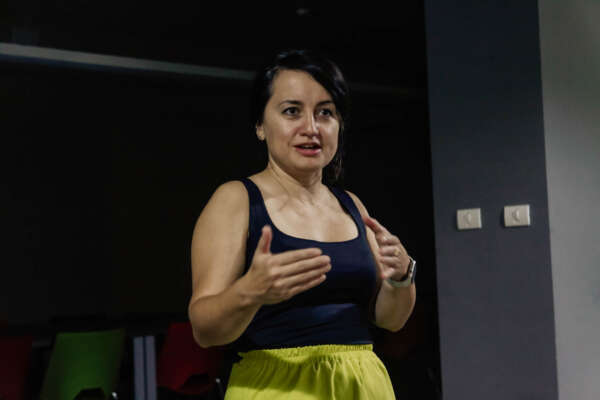
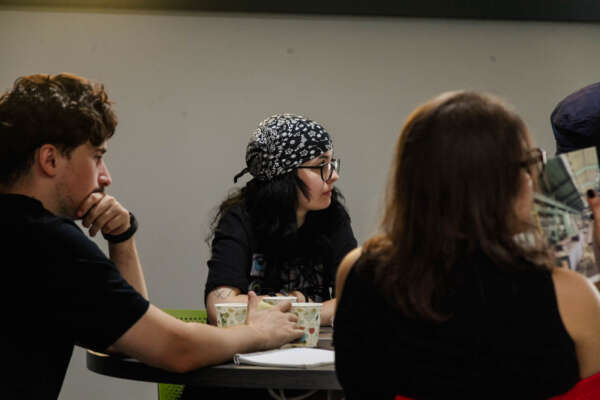
These were two of the questions we explored together during our working session. The students' responses were particularly valuable, reflecting both their curiosity to discover a world they would otherwise have little access to and the importance of giving those who experienced it the opportunity to tell their own stories.
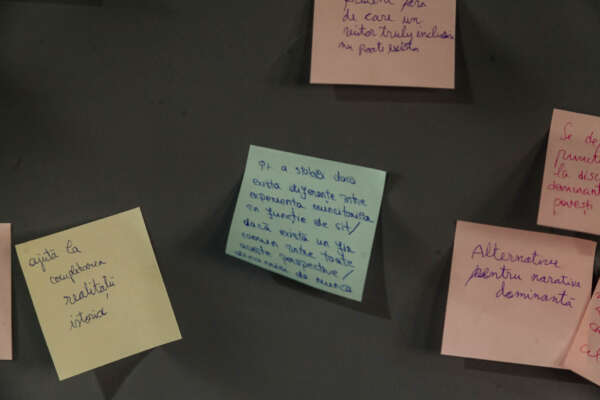
Here are some of the ideas that emerged from our discussions and will guide our work in the months ahead.
- We want to listen to voices missing from official history. Beyond production figures, industrial achievements and political decisions, we want to understand how people experienced those times. What do they remember? What mattered to them? And which stories have remained untold?
- We collect oral histories to make room for different perspectives on the past. The same period can mean very different things to those who lived through it. Pride in one's work can coexist with memories of difficult working conditions, while personal stories can add nuance to, or even challenge, the dominant narrative of an era.
- We want to build bridges between generations. What can we learn about one another when we take the time to listen?
- We are exploring new ways to bring these stories back into the city. An interview might become part of a documentary film, an exhibition, a collage of photographs and memories, an audio installation or a local publication. We are exploring how these histories can reach the community, including people who would not normally think to look through an archive.
- We are building an archive that remains open. Every testimony becomes part of a growing collection that people can continue to contribute to and that future generations can return to.
Over the coming weeks, we will be processing the interviews and researching the archival materials and photographs we have collected. Some of these will contribute to the interactive digital map on muzeulvirtualresita.ro and to an exhibition dedicated to the UCMR industrial site.
We will also continue organising gatherings and workshops, including collage-making and storytelling sessions centred on the world of the factory.
Follow our work on MKBT's Facebook page.
Photo credits: Ara Aur
The Universul Uzinal project is funded by the Administration of the National Cultural Fund (AFCN) and implemented with the support and co-funding of Reșița City Hall.