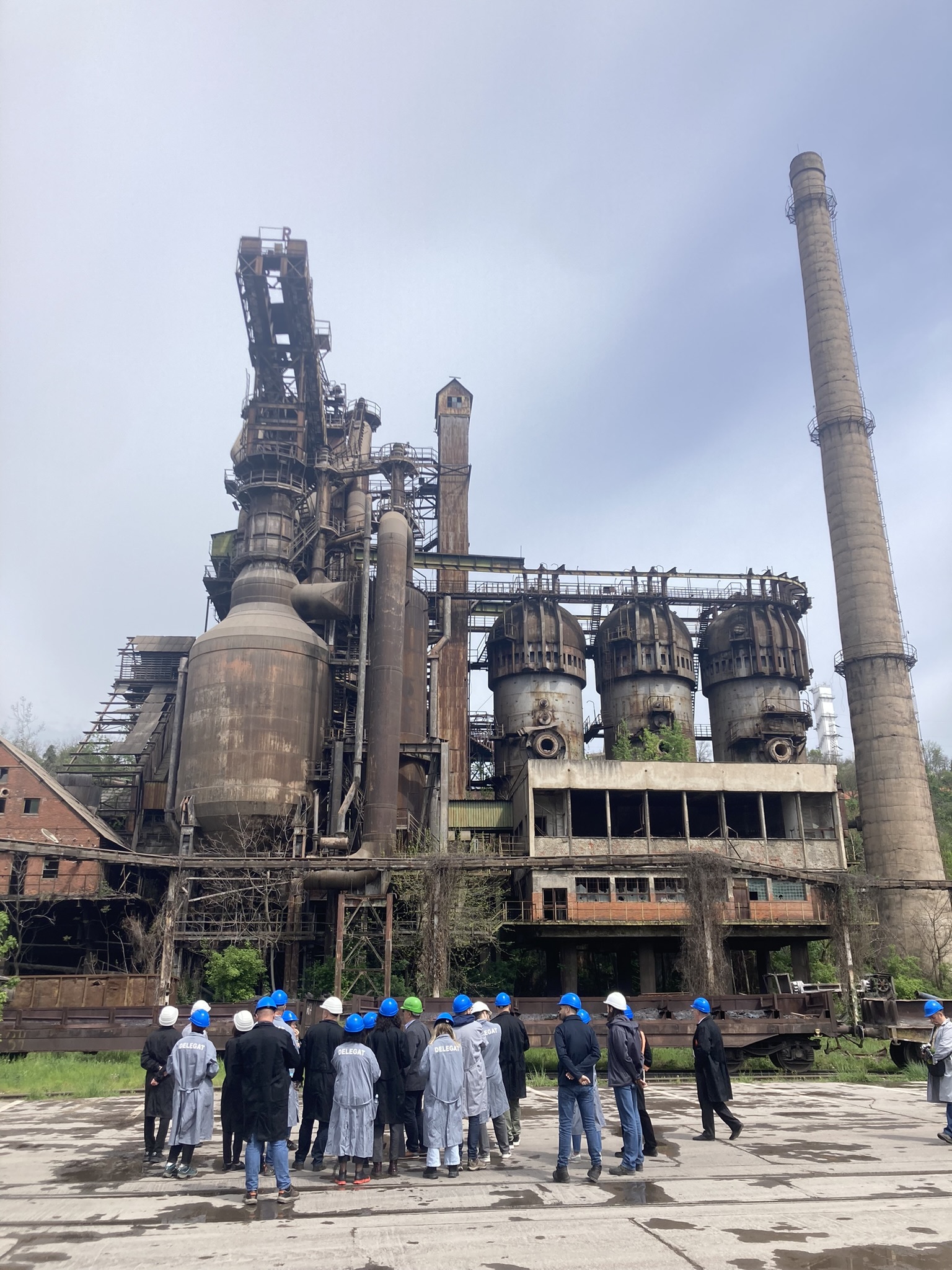
A lot happened last year: the trip to the Czech Republic and Poland in search of inspiration, the Oral History Group, the Reșița Industrial Heritage Lab summer school dedicated to the furnace, and “Awakening the Furnace”, the event that brought Street Delivery and UrbanEye Film Festival together. There were open days at the furnace, a film workshop, archive screenings about the steelworks, workshops and guided tours, an artist residency, a community dinner on Furnalelor Street, and much more besides. All of this brought together a host of organisations from Reșița and beyond, and set in motion a winding, delicate process of sounding out and negotiating the takeover of Blast Furnace No. 2 by Reșița City Hall.
This exercise in civic mobilisation is a lot like a relay race. Blast Furnace No. 2 still stands today because, in the 2000s, the people of Reșița made it overwhelmingly clear in a public survey that they wanted it preserved, not demolished like its twin. And a handful of steelworkers and heritage enthusiasts did the legwork and applied the pressure needed to get it listed as a historic monument.
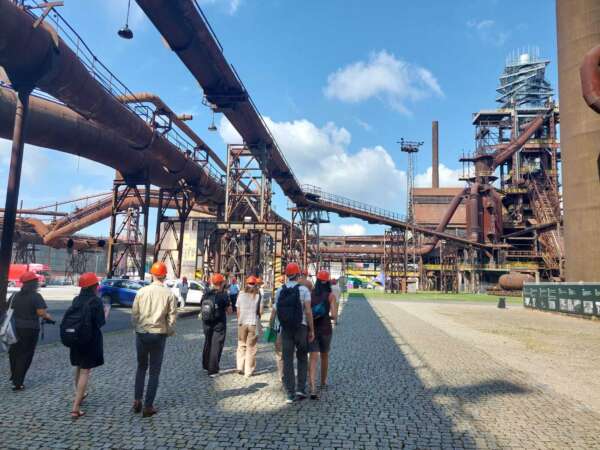
Patience is paying off elsewhere, too. In Anina, the Mining Museum opened this year after colossal efforts by a tiny community. In Petrila, on 18 November, funding contracts were signed for the restoration and adaptive reuse of the Petrila Mine Historic Ensemble, after 15 years of exploratory talks, civic effort and negotiation.
As a society, we are still too fascinated by the heritage of privilege and opulence: castles, manor houses, villas. It is time we placed more value on the heritage of labour and human ingenuity, which these industrial sites, built and kept running by generation after generation of workers, hold in abundance.
Taking over Blast Furnace No. 2 will be a huge milestone for the city hall of a small city like Reșița. But it is a necessary step, because only then will it be possible to attract the funding needed to revitalise this symbol of Reșița’s 250-plus years of steelmaking.
A restoration project of this scale will take at least 10–15 years, even in the best of circumstances. So we need to start practising the baton handover now and find the team that will carry the project into its next stage: policymakers at national and European level, engineers, architects, and specialists in heritage management and cultural mediation.
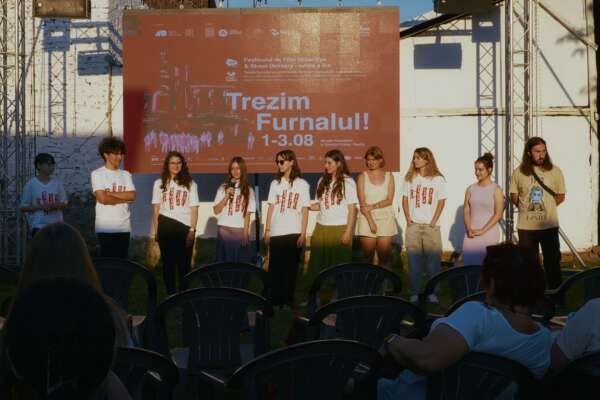
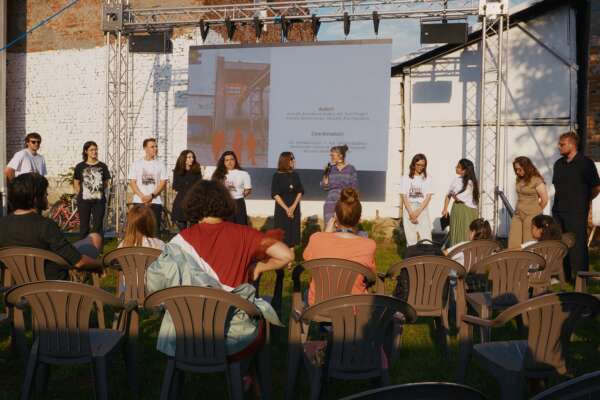
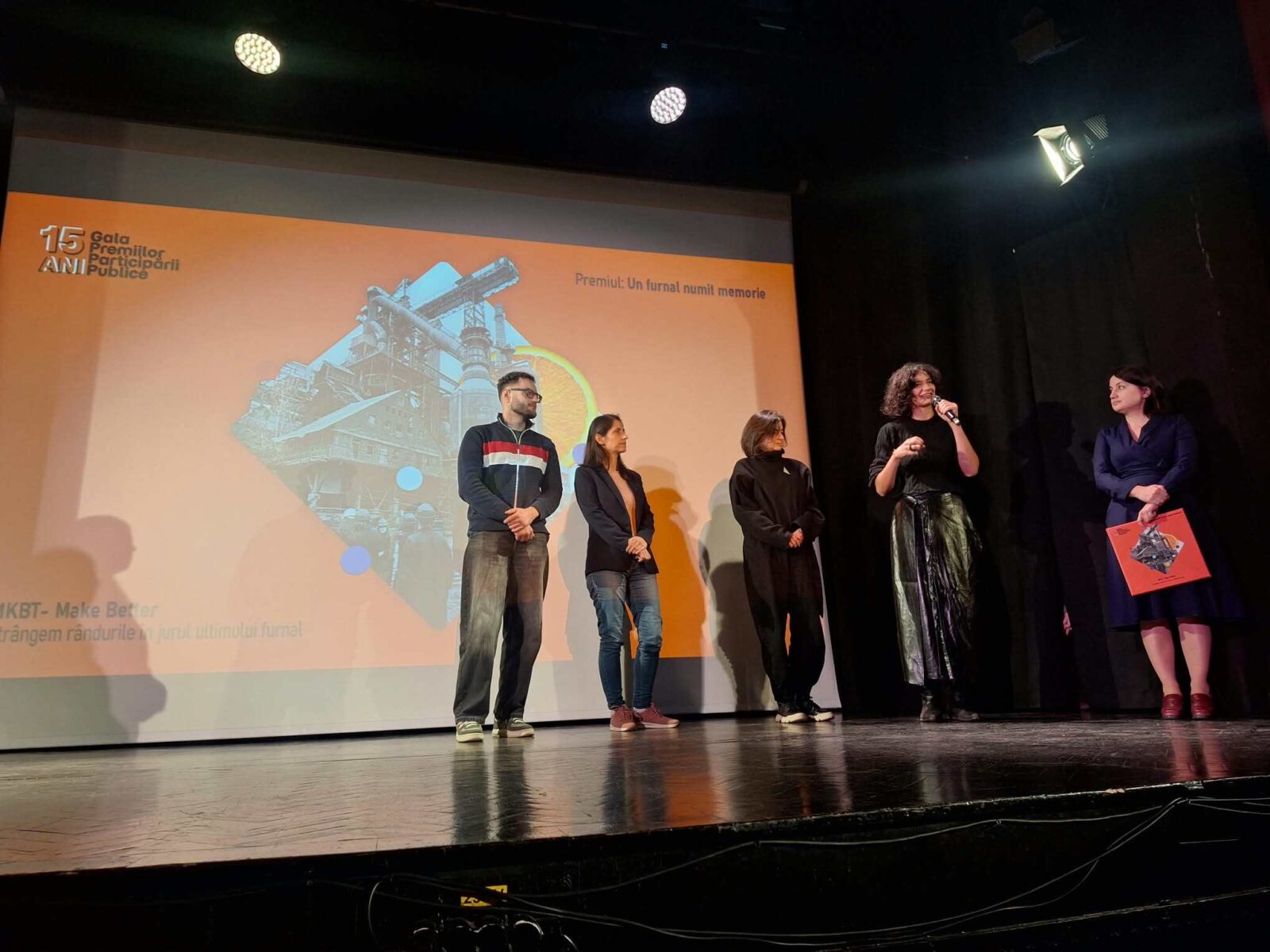
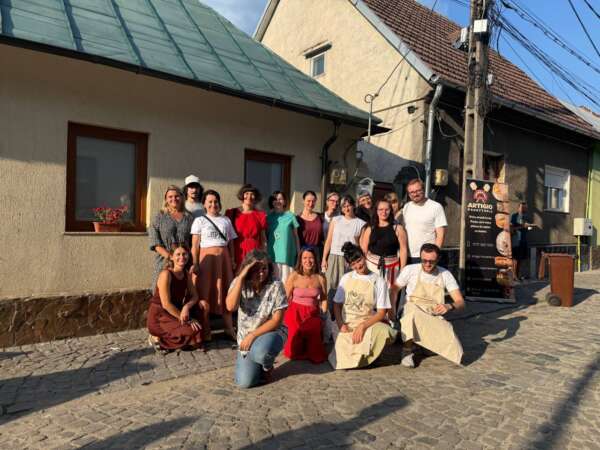
Those who gathered around the last blast furnace:
MKBT, ARTA în dialog (UrbanEye Film Festival), Atelierul Non-Formal de Planificare Spațială, Fundația Comunitară Banatul Montan, Muzeul Cineastului Amator, Dash Film, Scena9, artists, volunteers, students, educators and researchers.
______
The initiatives behind this mobilisation were funded by the Administration of the National Cultural Fund, the Order of Architects of Romania and The King’s Foundation, with the support and co-funding of Reșița Municipality.